



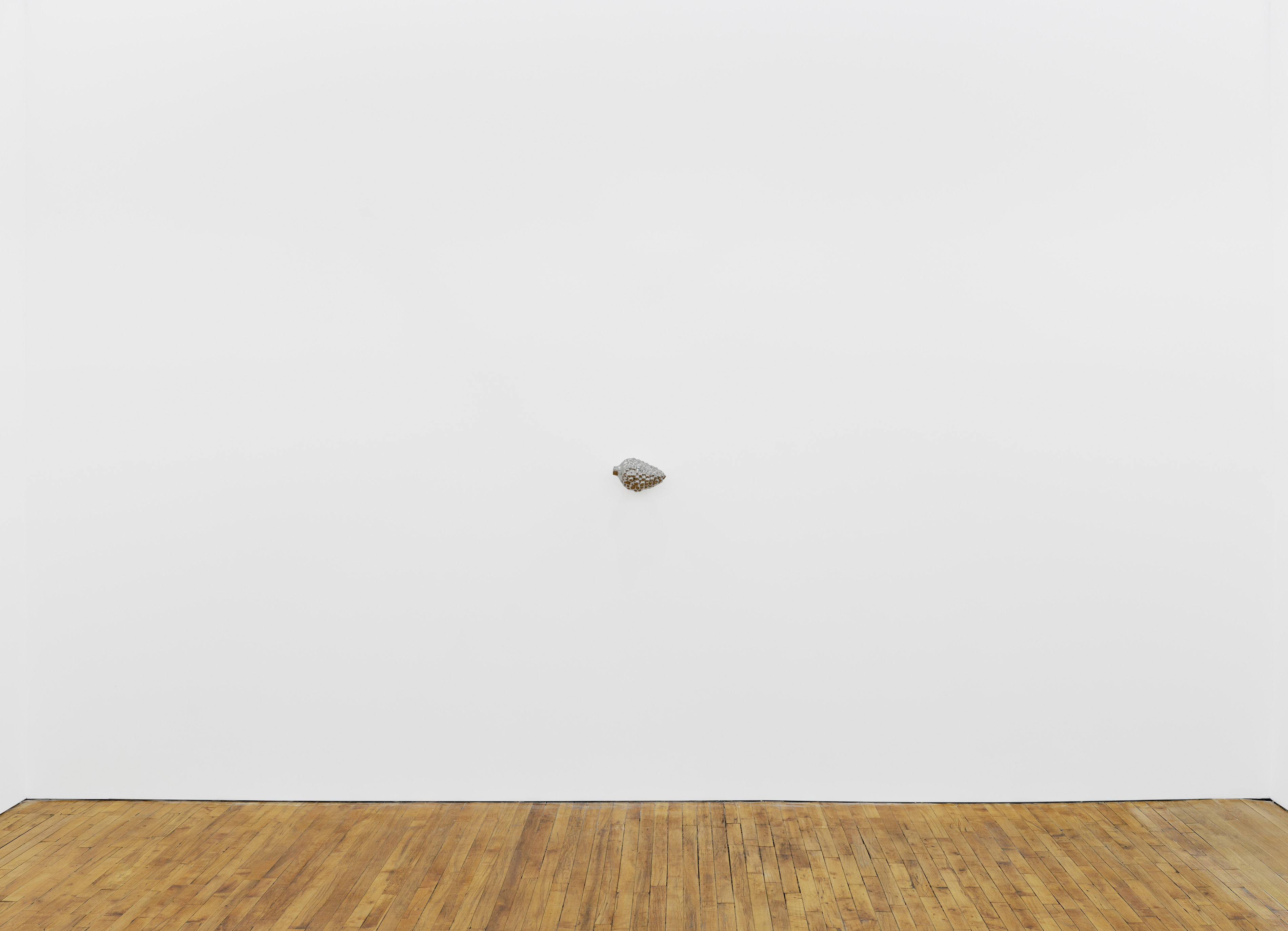
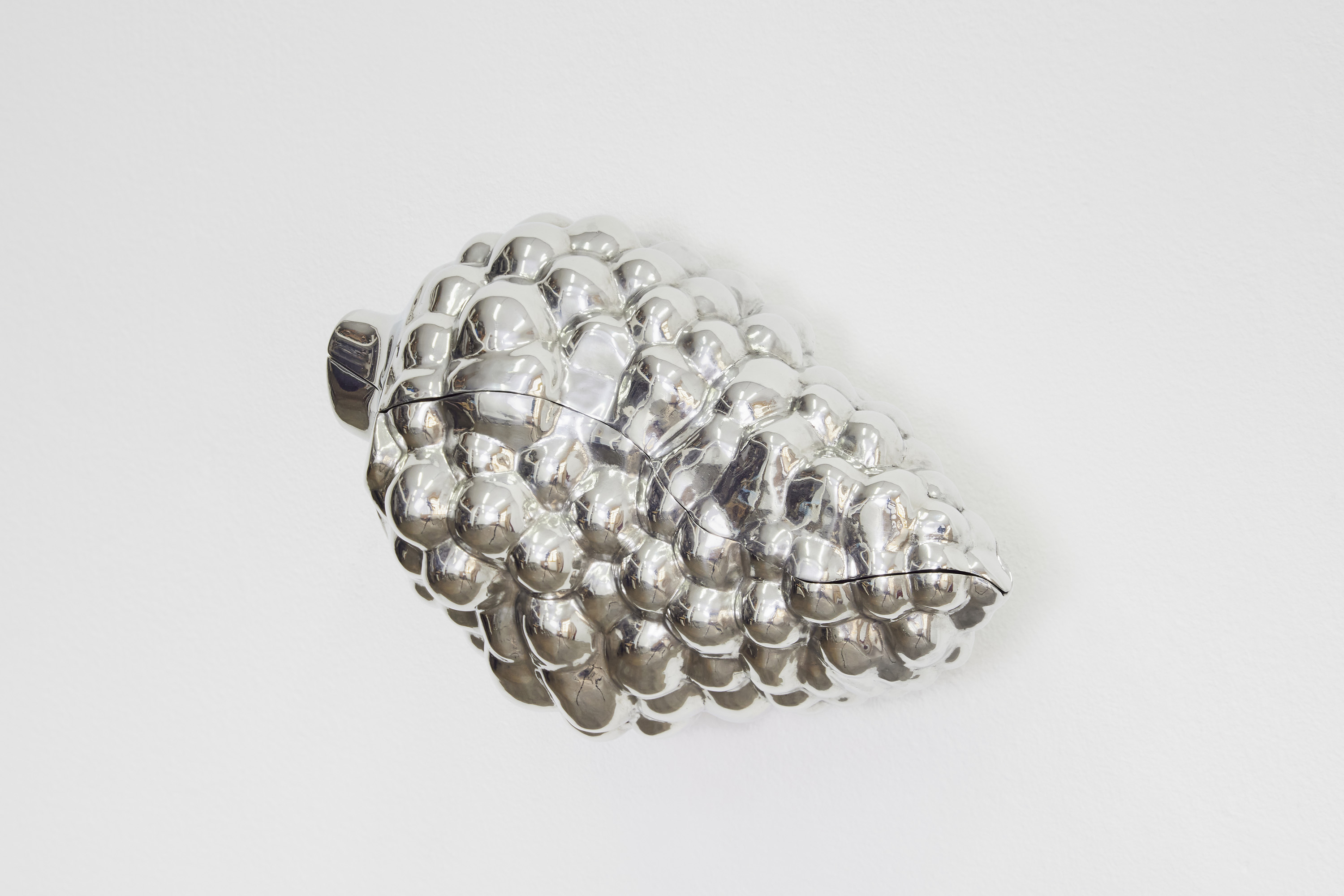
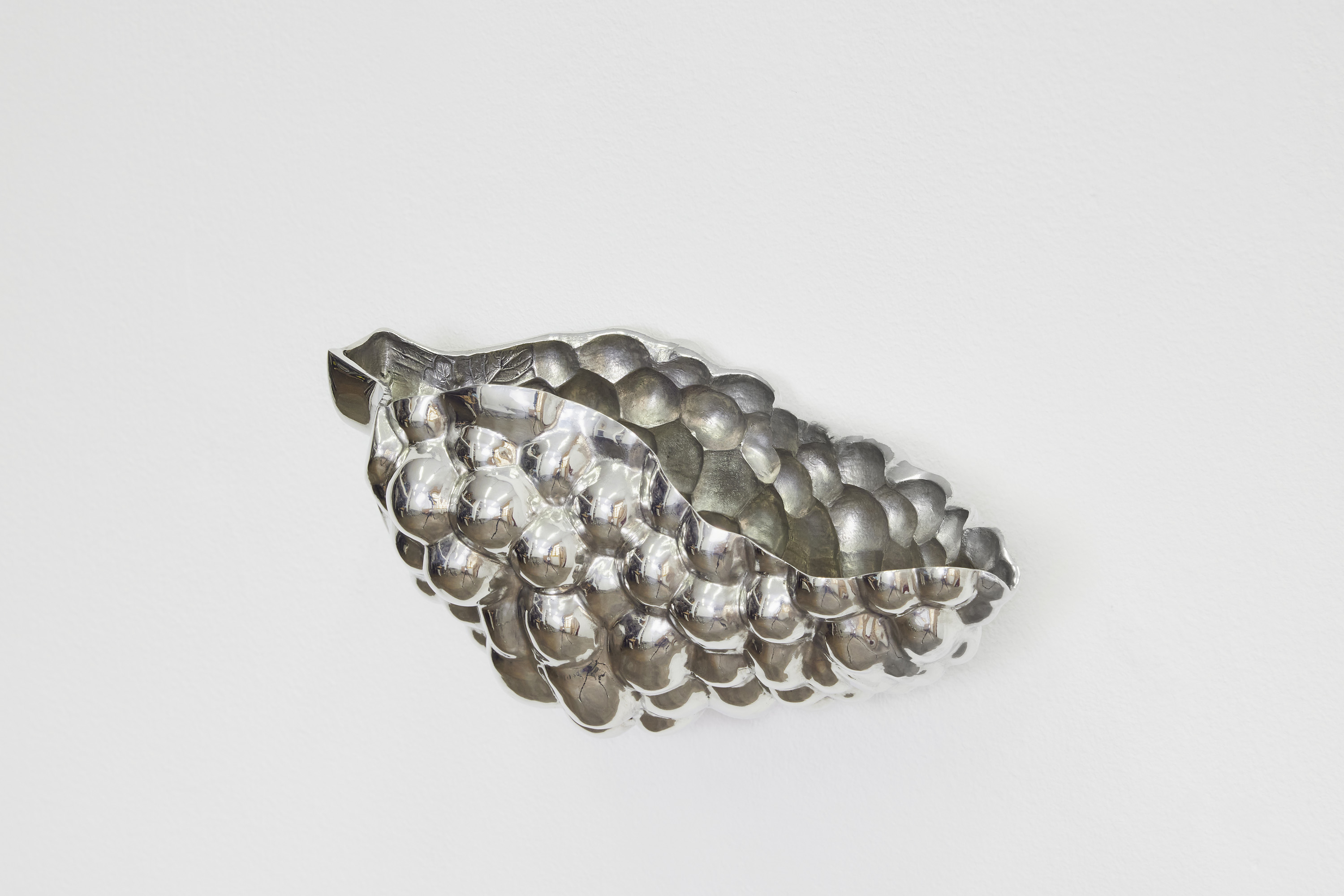

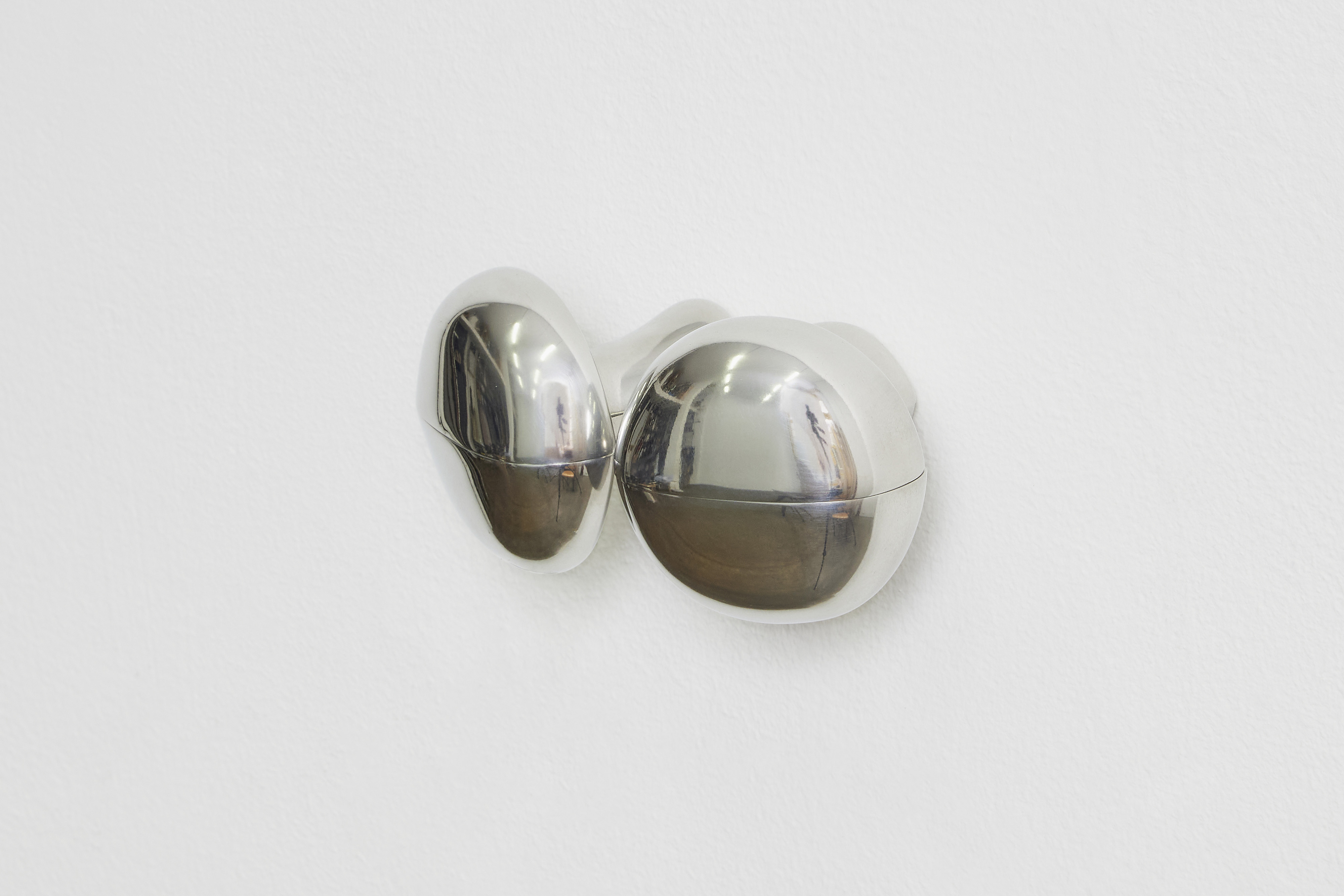

Bass Rayé Richelieu at La Caravelle, Croustade de Homard at Cafe Chambord, Fricassée d’Escargots au Beurre de Noisette de Champignons des Bois at Le Périgord: all delicacies once found at the premier destinations for French cuisine in twentieth century New York. The pinnacle of modernity’s high taste, before gradually falling out of fashion.
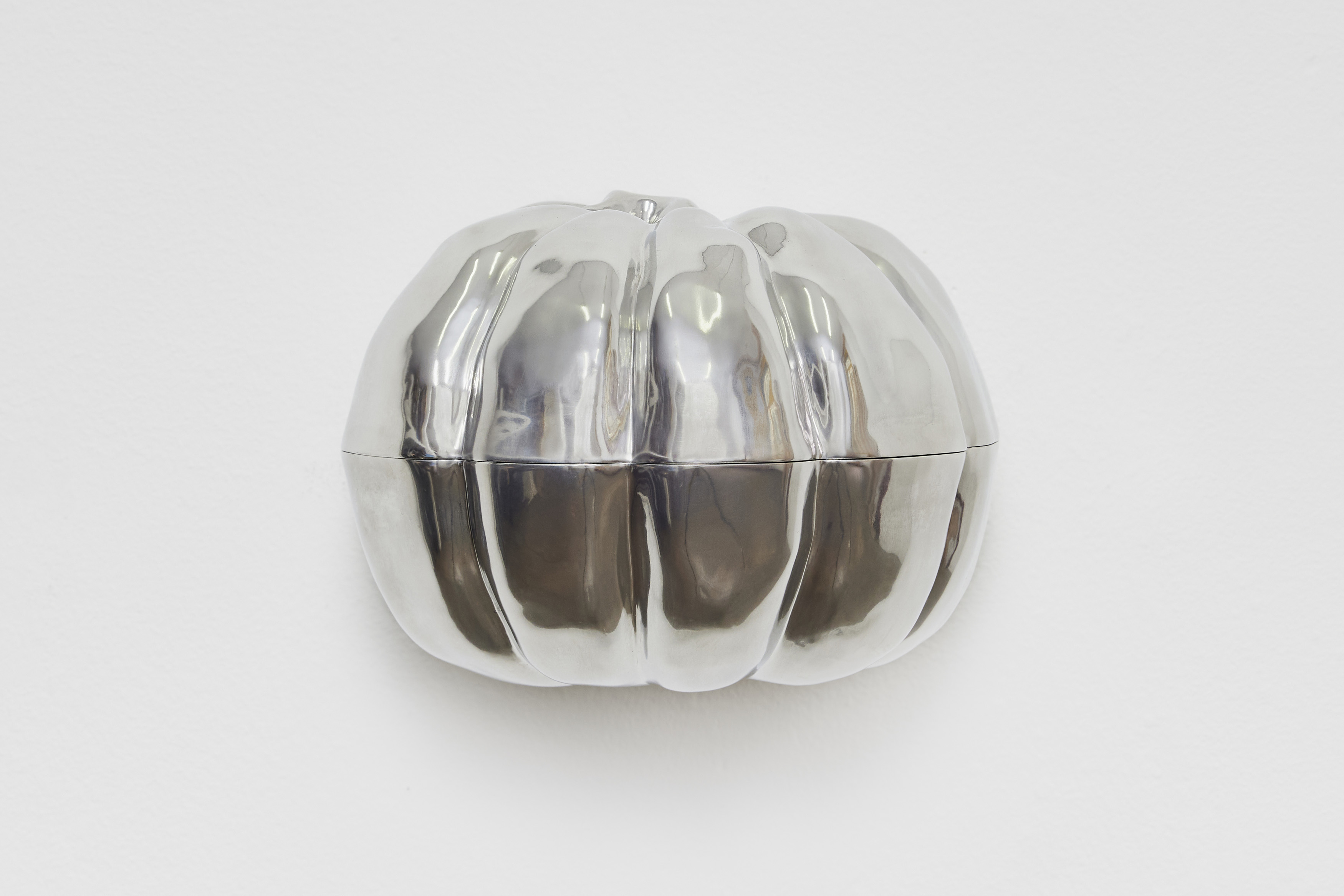
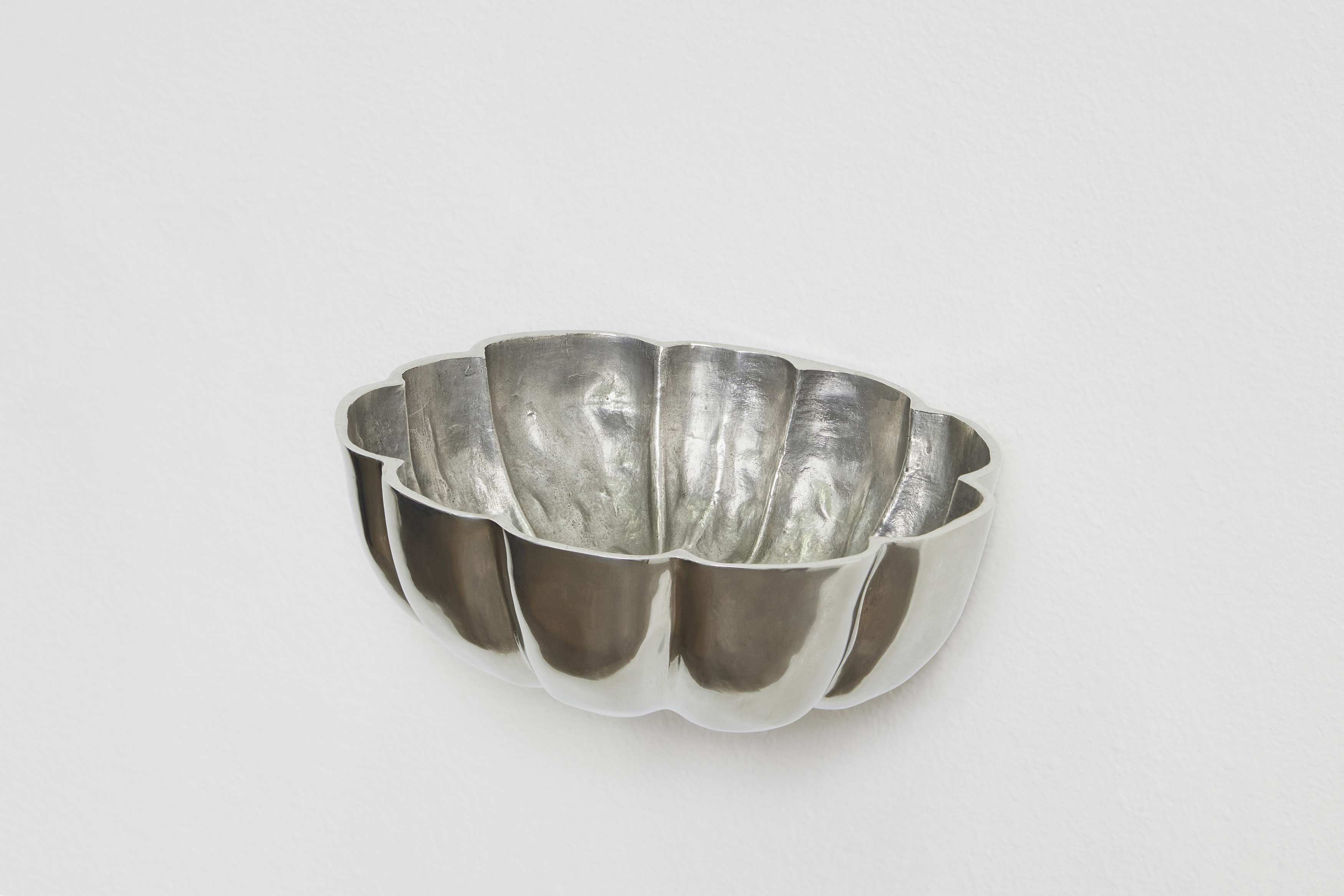
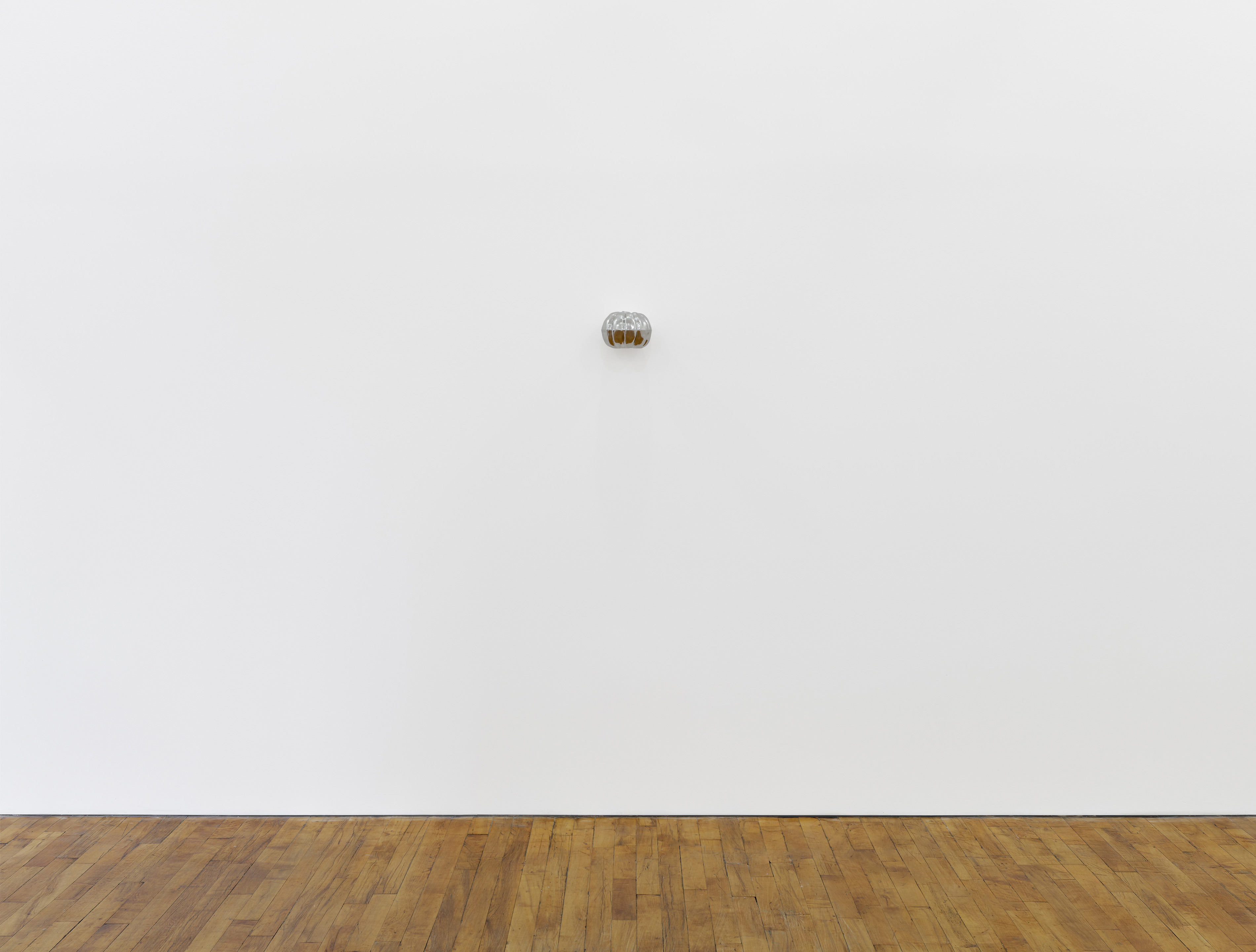
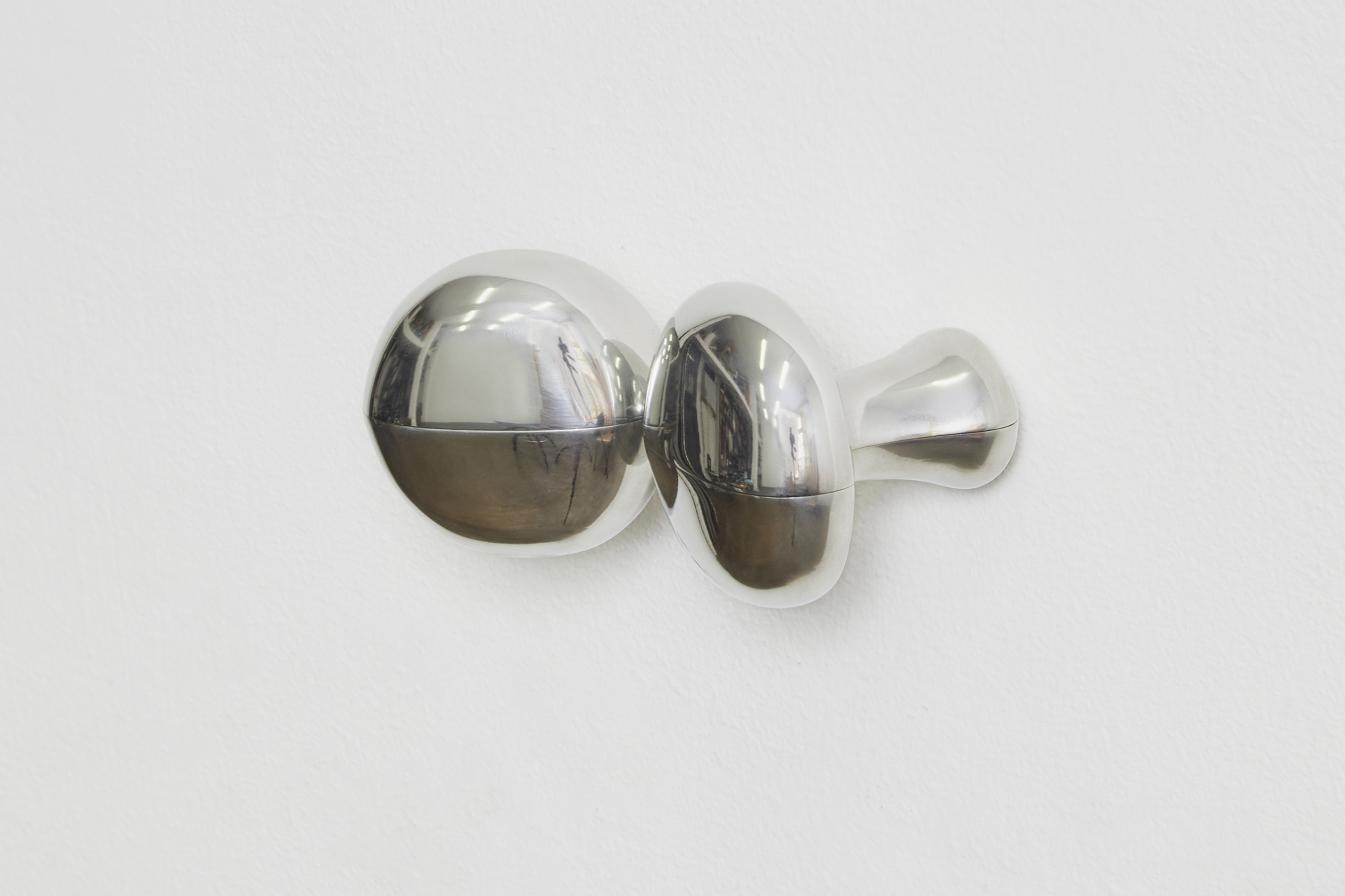
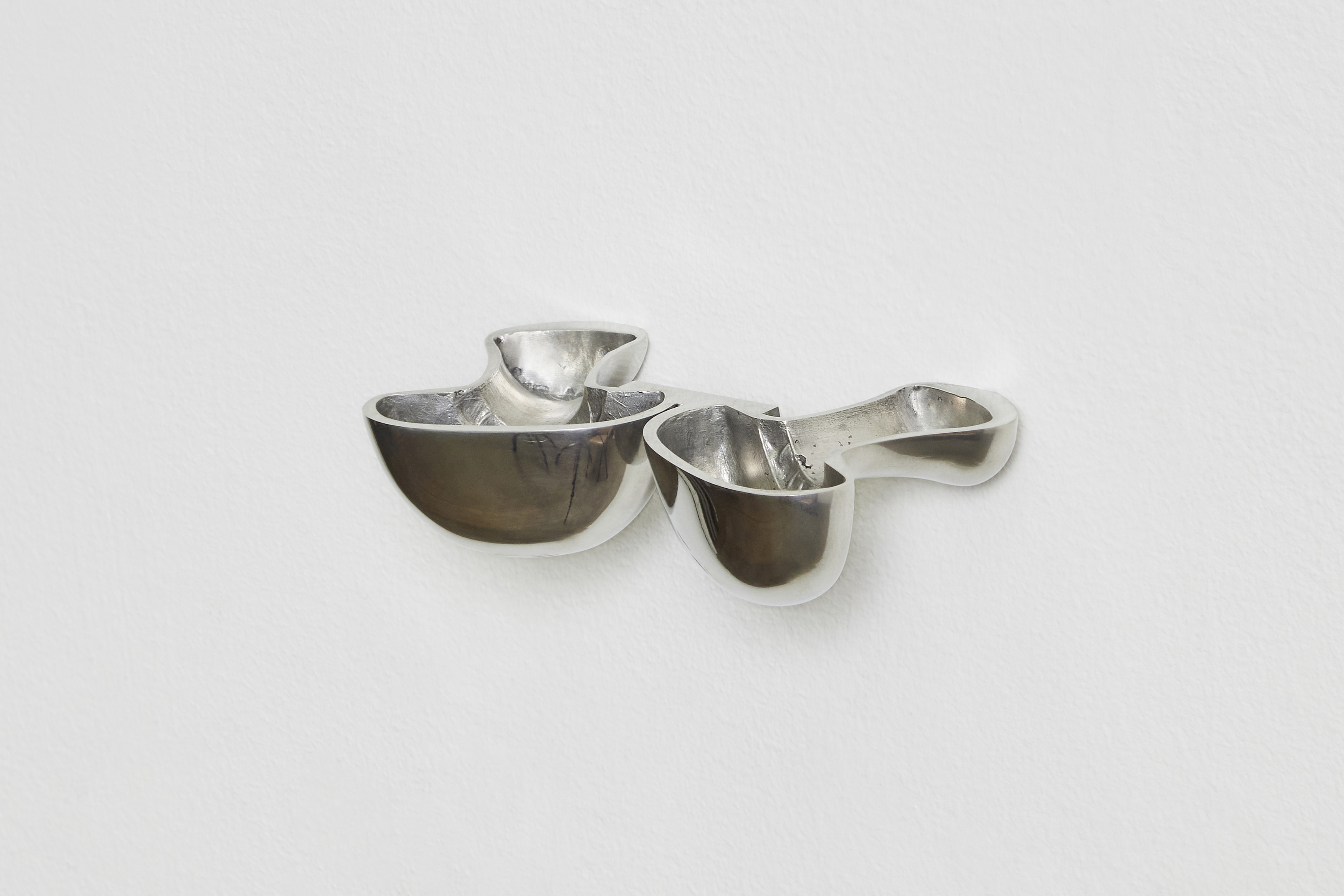
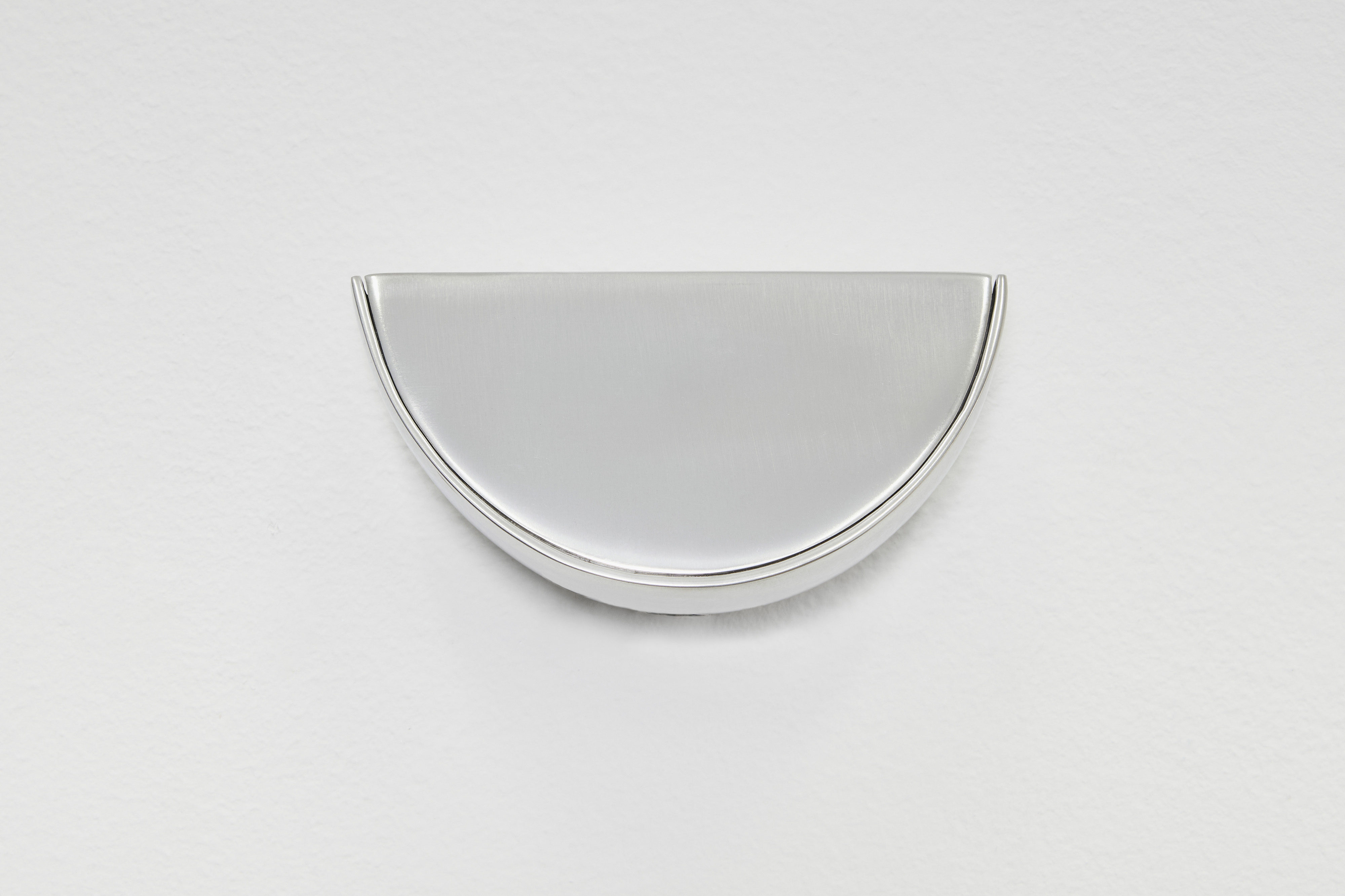
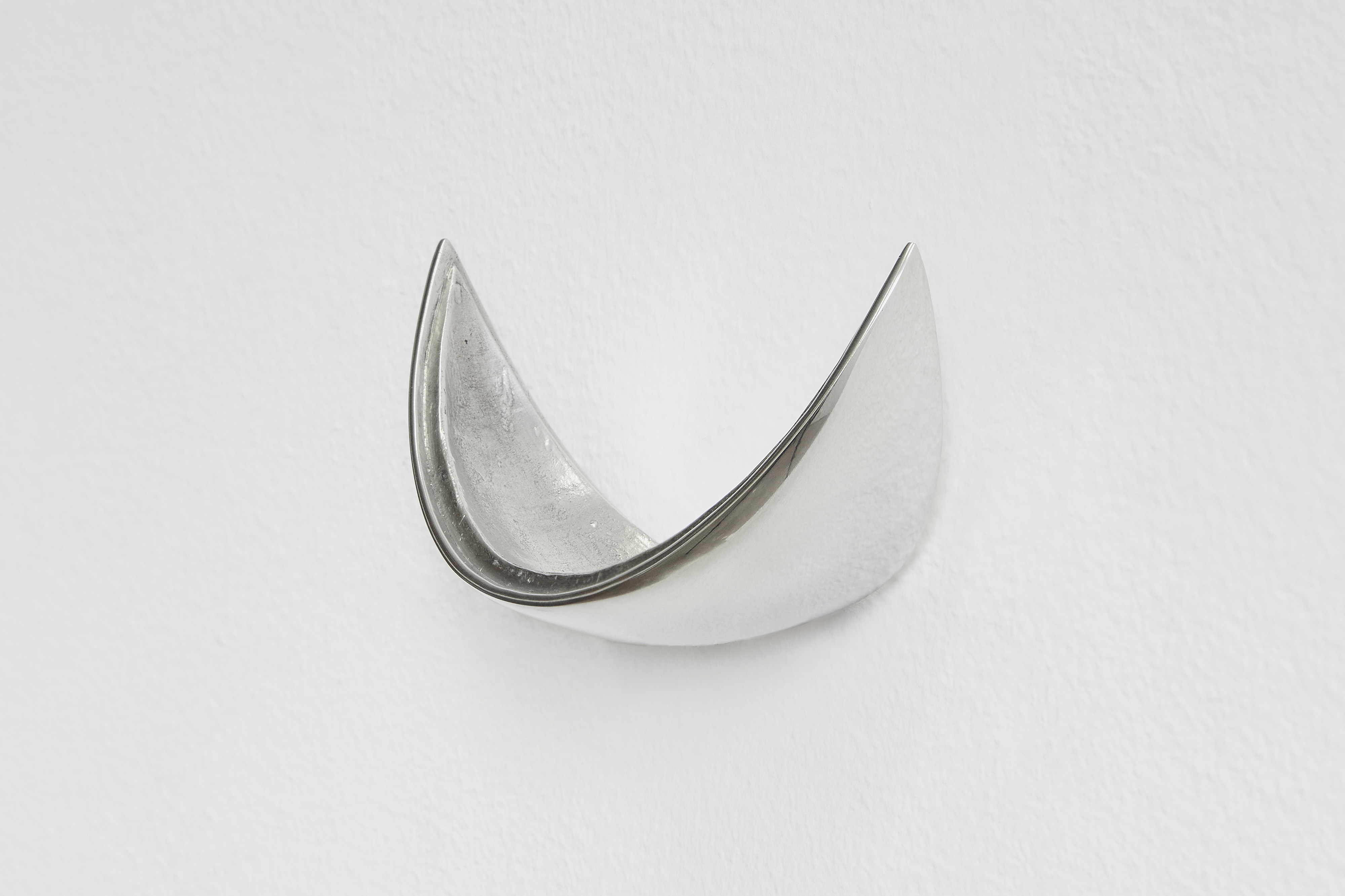
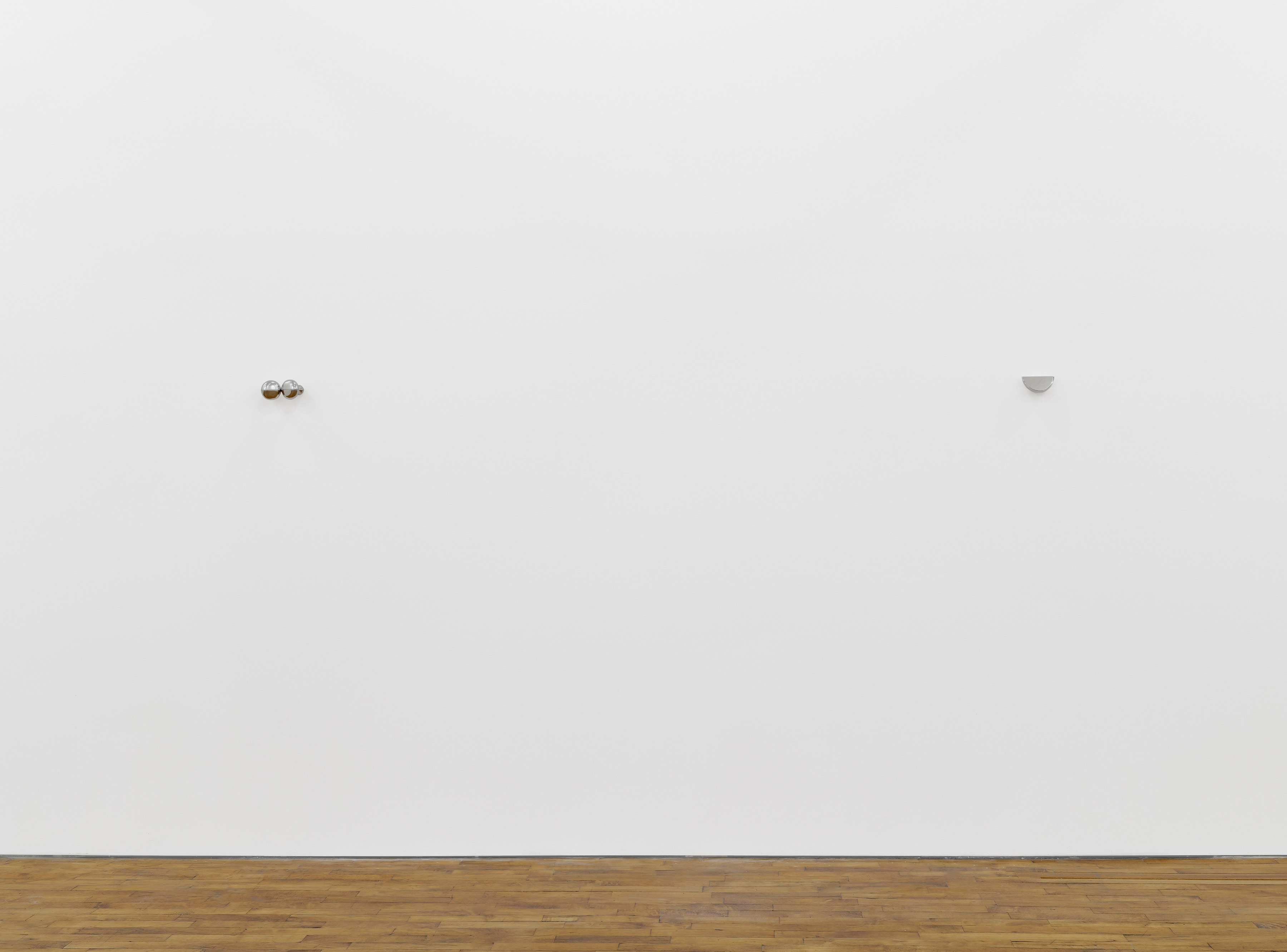
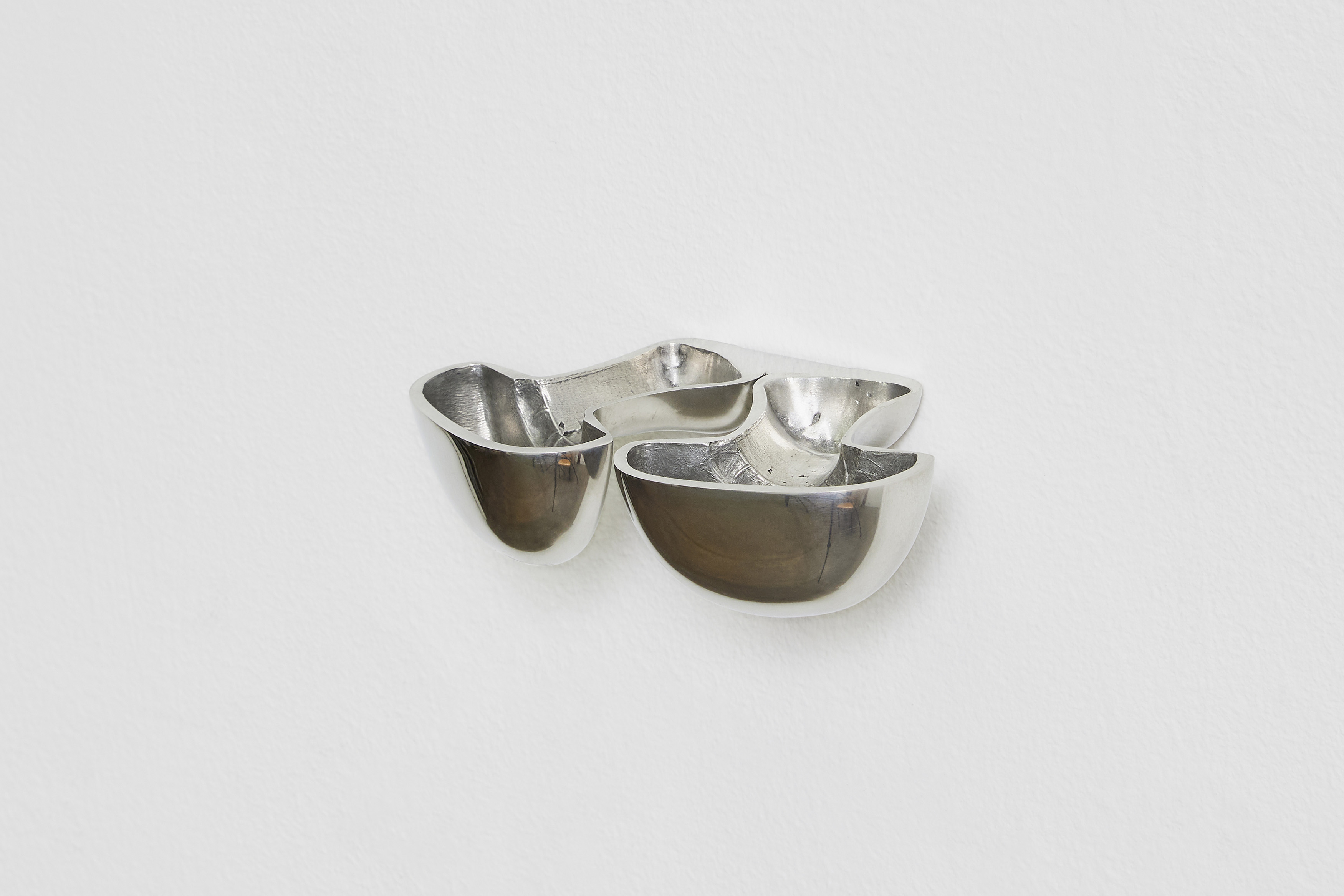
Julien Monnerie’s pewter casts are reworked remnants of that age of culinary artifice. Produced by the workshop of Létang Fils and once employed in French kitchens, they originally served to present ice creams in the guise of grapes, mushrooms, pumpkins or lemon wedges, simulating the freshness of seasonal produce. Monnerie subjects them to an intensive process of sanding, deburring, faceting, and polishing, transforming them into mirror-bright surfaces, imbuing them with a reflective instability. Mounted on the wall, they acquire an uncanny frontality, returning as yet another species of culinary trompe l’œil of our Cake-or-Fake epoch. Instead of reaching for the mental pleasure of misidentification, the play lies in allegorical associations between the ingredients and the psychic states they induce: consider the grapes’ boozy, shimmering disorientations or the mushrooms’ psychotropic reconfigurations. Such associations project outward, standing in contrast to the molds’ essential inwardness, for it is within their shallow cavities that these objects once fulfilled their original purpose.
Emerging anew in their hyper-polished, emptied-out Modernist semblances, it might at first seem that their shiny exteriority is another Jamesonian critique of postmodern disorientation and depthlessness. Yet Monnerie’s work exceeds irony. His careful artisanal interventions, together with his evident affection for the objects’ histories of use, resituate them amid the sociality of the table. Maybe as a way to weave new relationalities in troubled times; think, for instance, of Renoir’s paintings, where the meal serves as the site to repair social relationships in a country still marked by the wounds of the Commune. Now that New York’s French bistros are back à la mode, it is as if those unearthly vessels had been polished sufficiently to reenter the world, fittingly in the privileged realm of dessert; Monnerie’s very own chef’s kiss.