
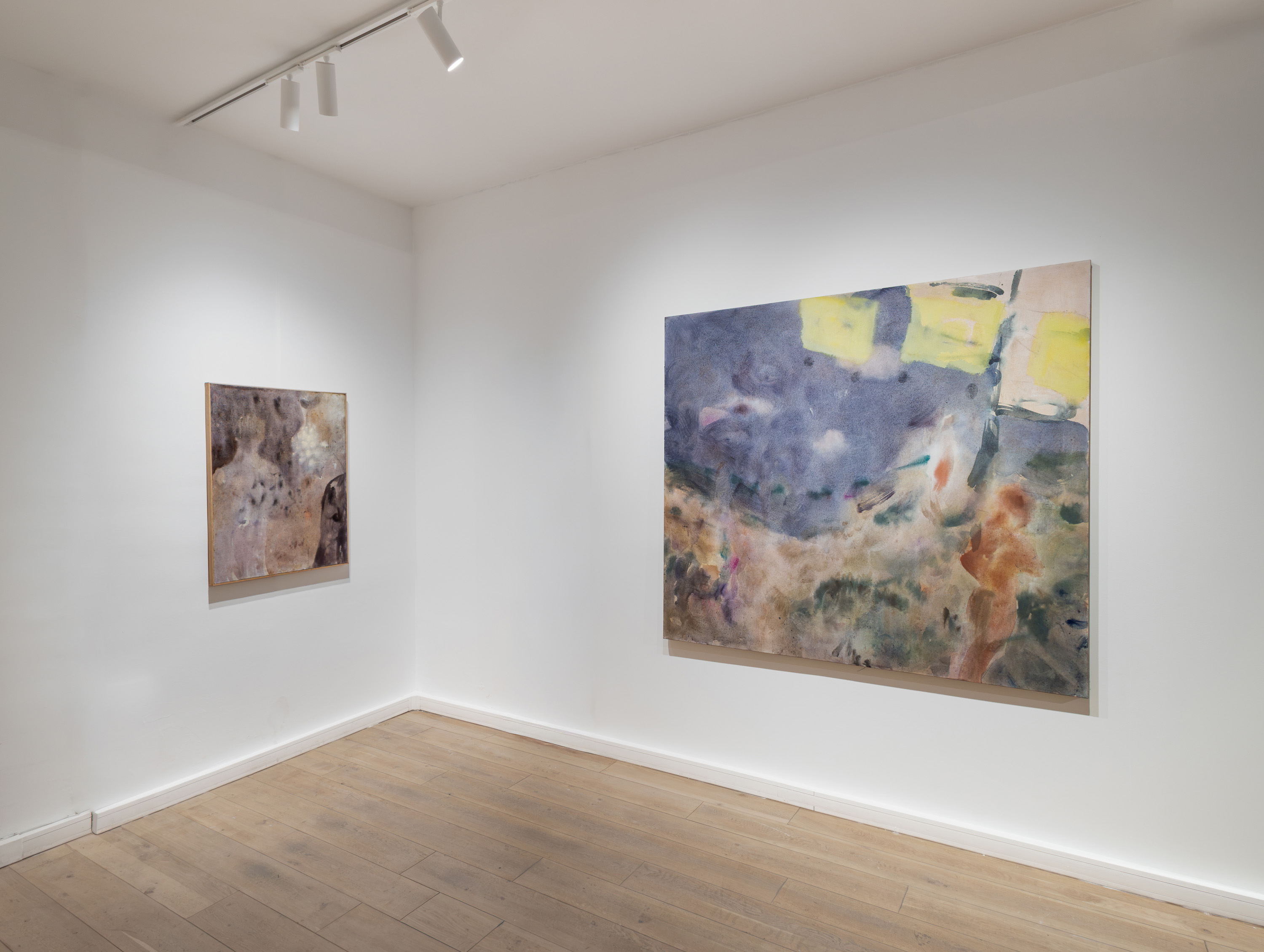
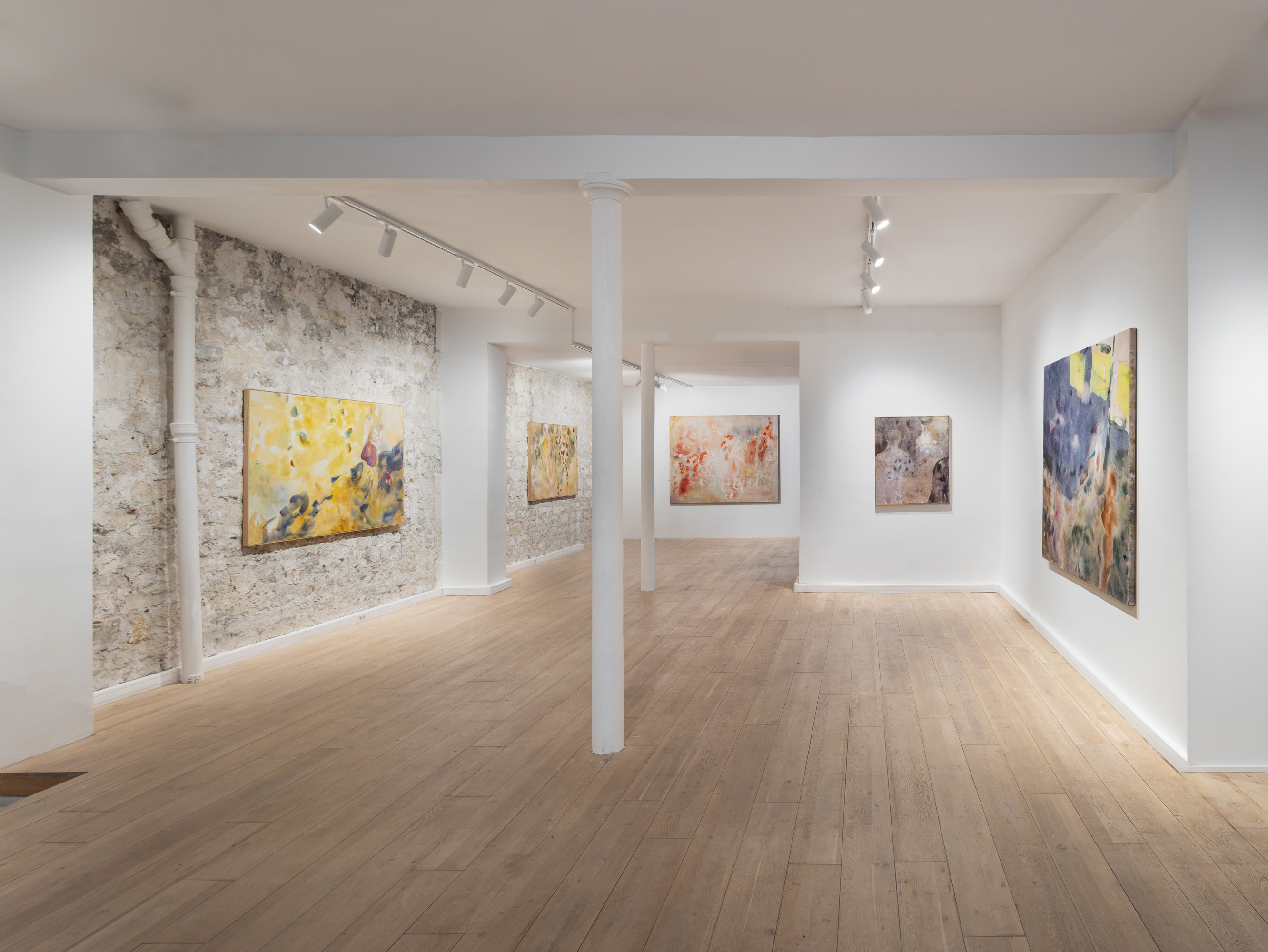
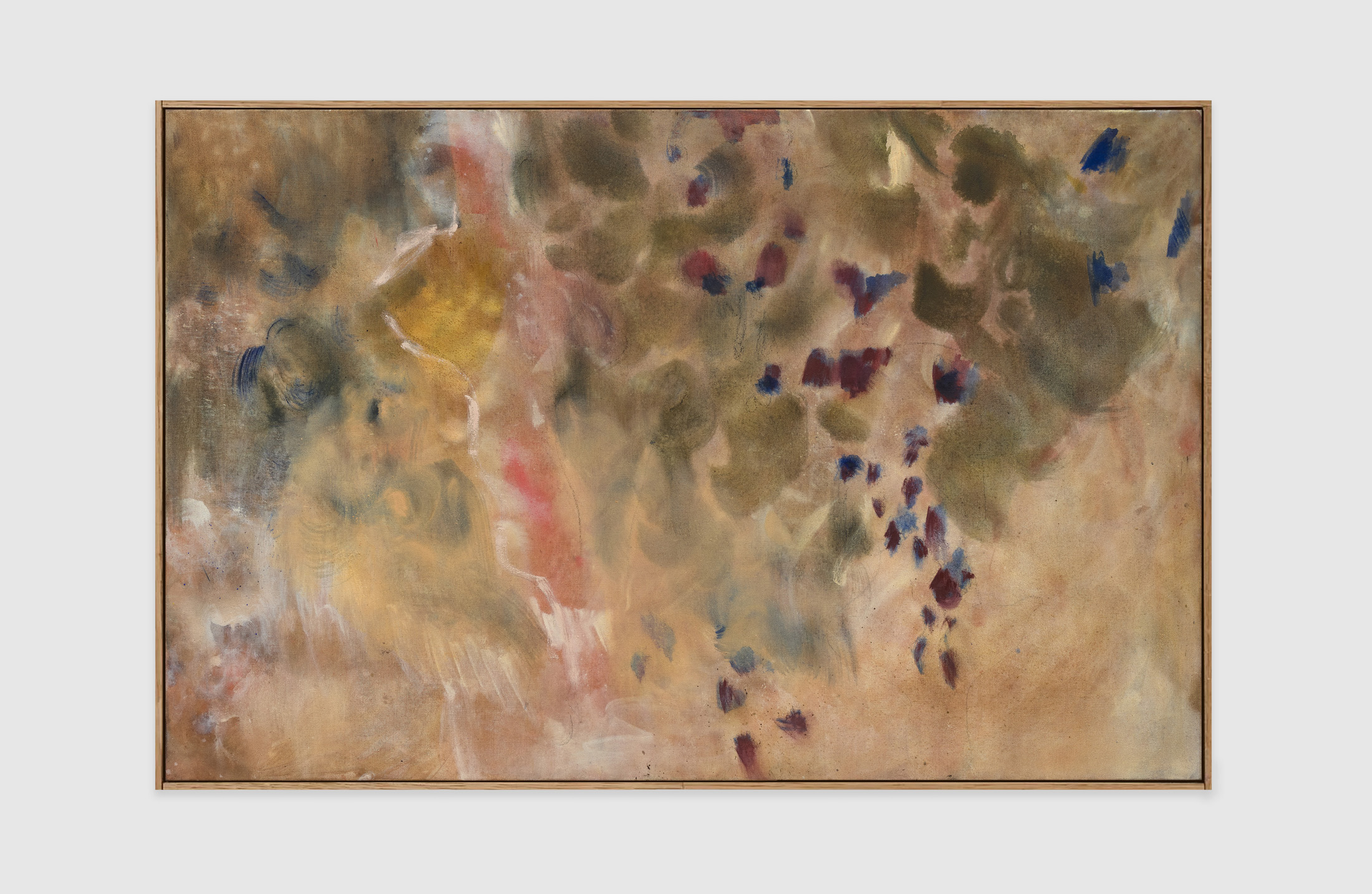
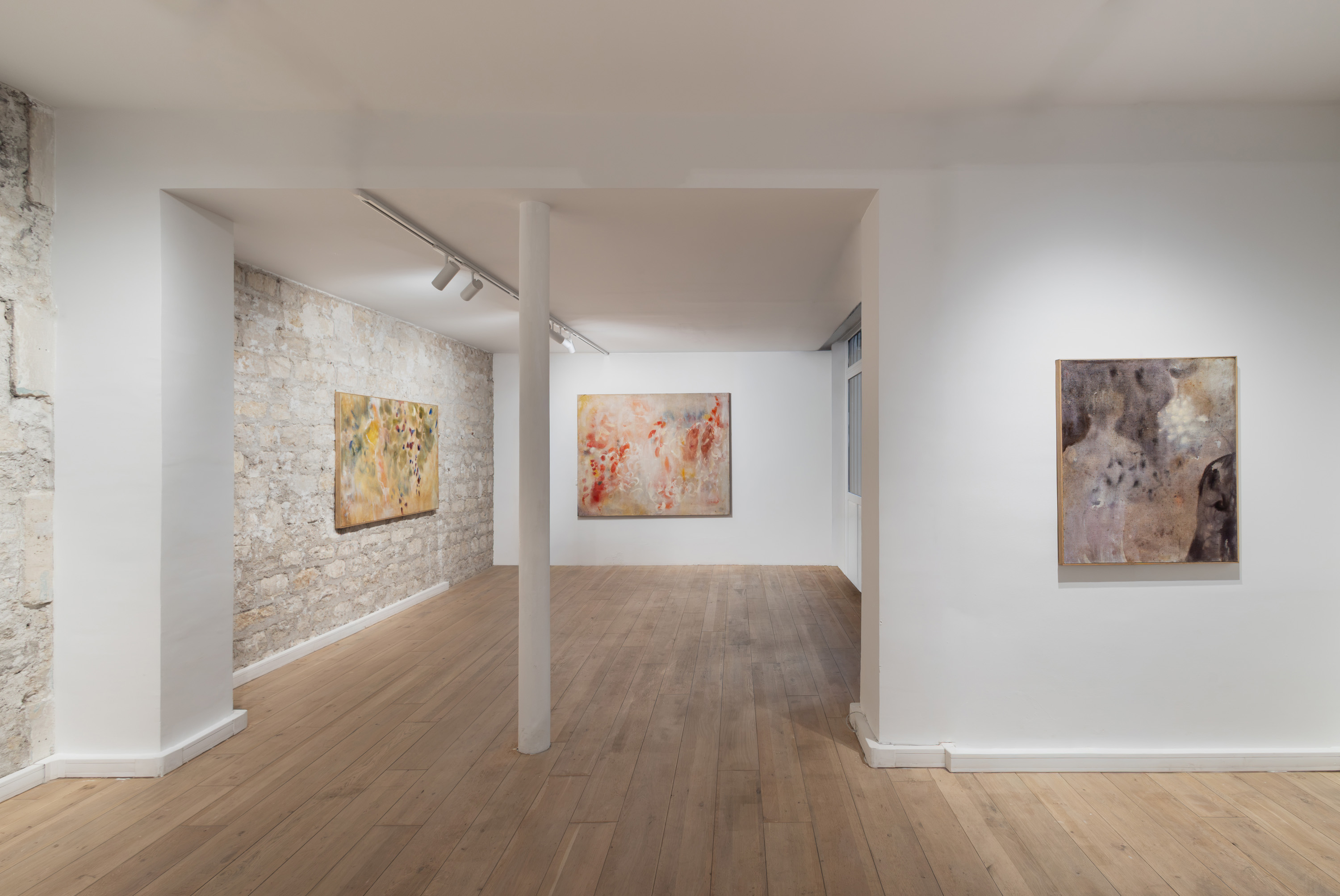
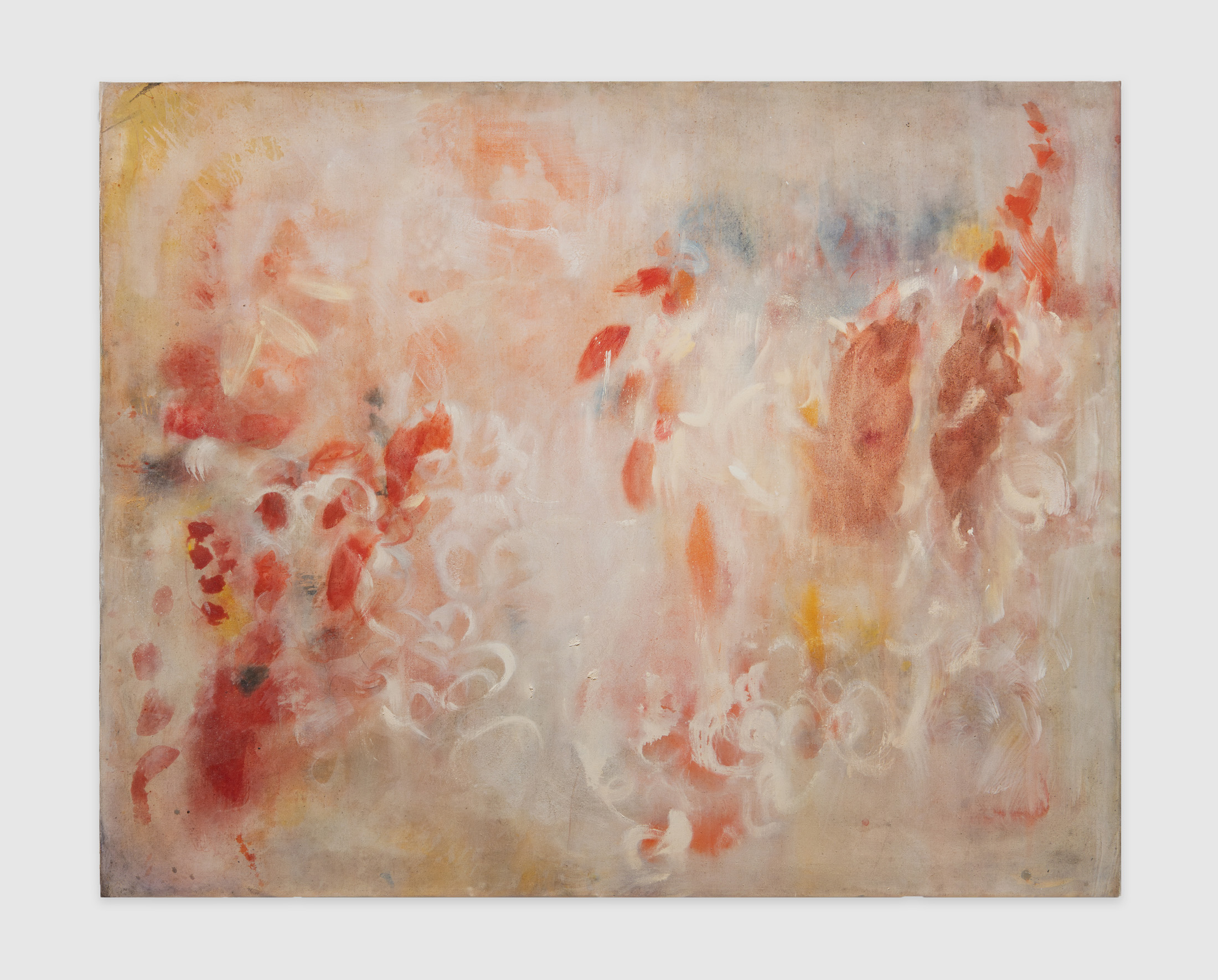
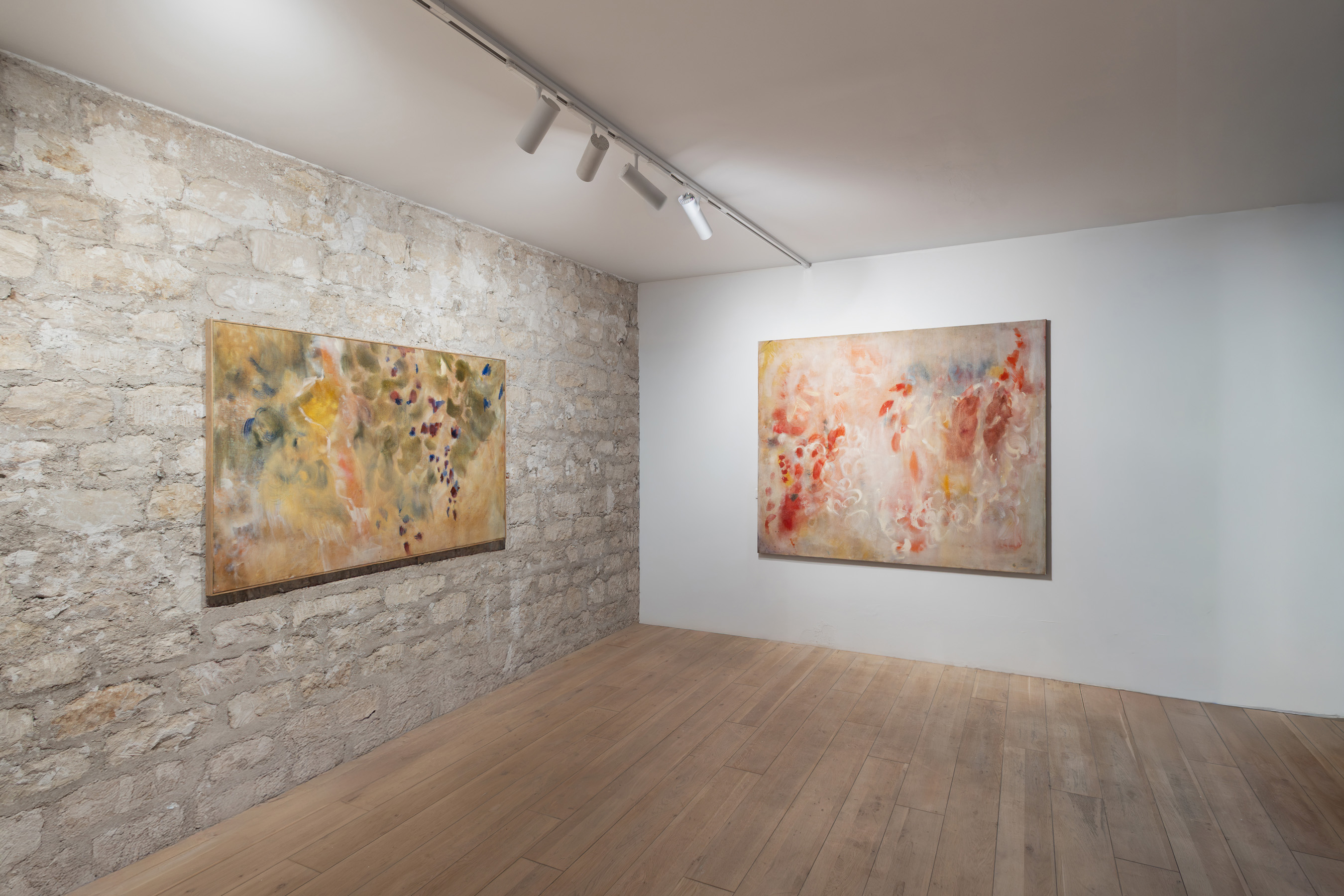
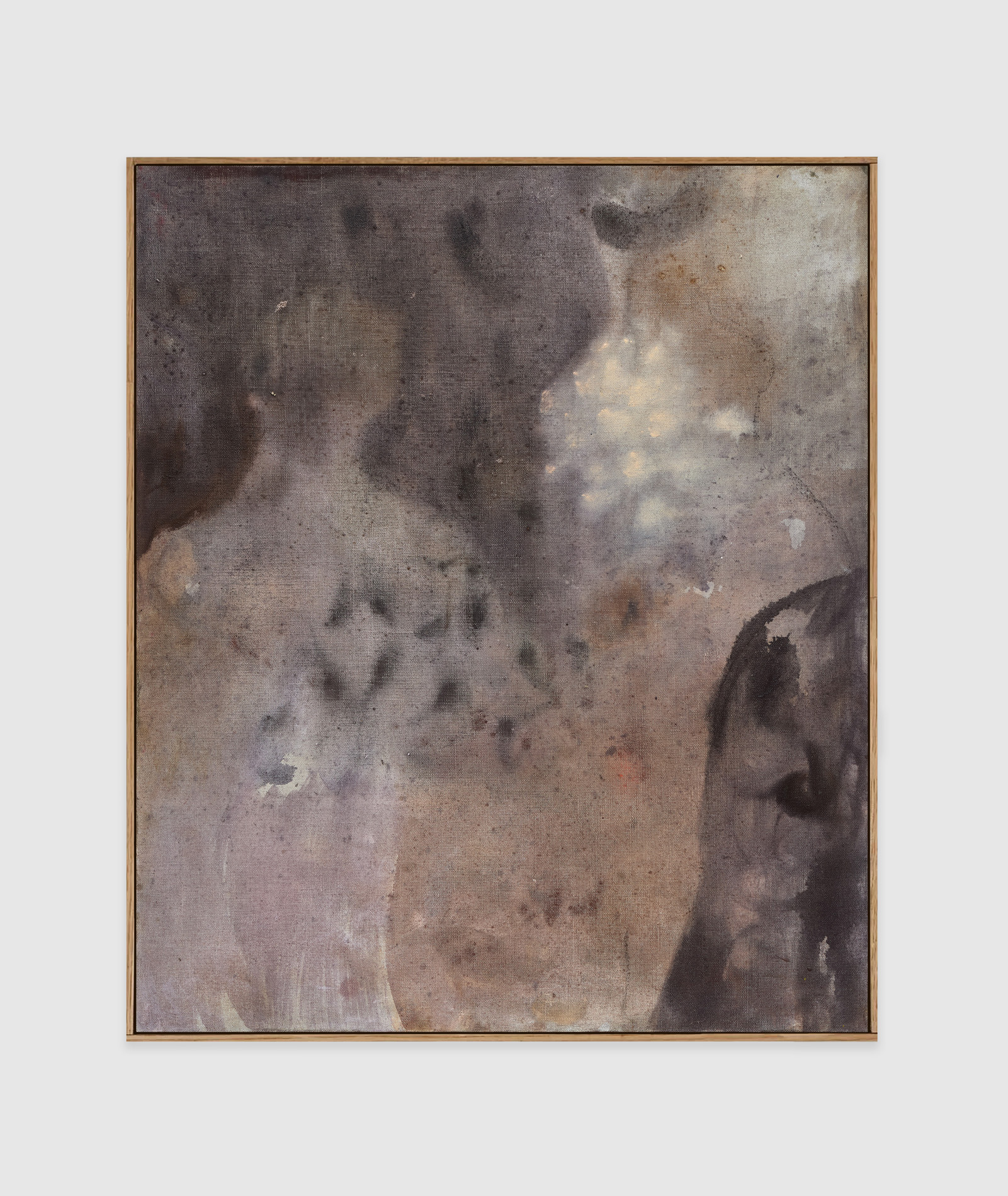
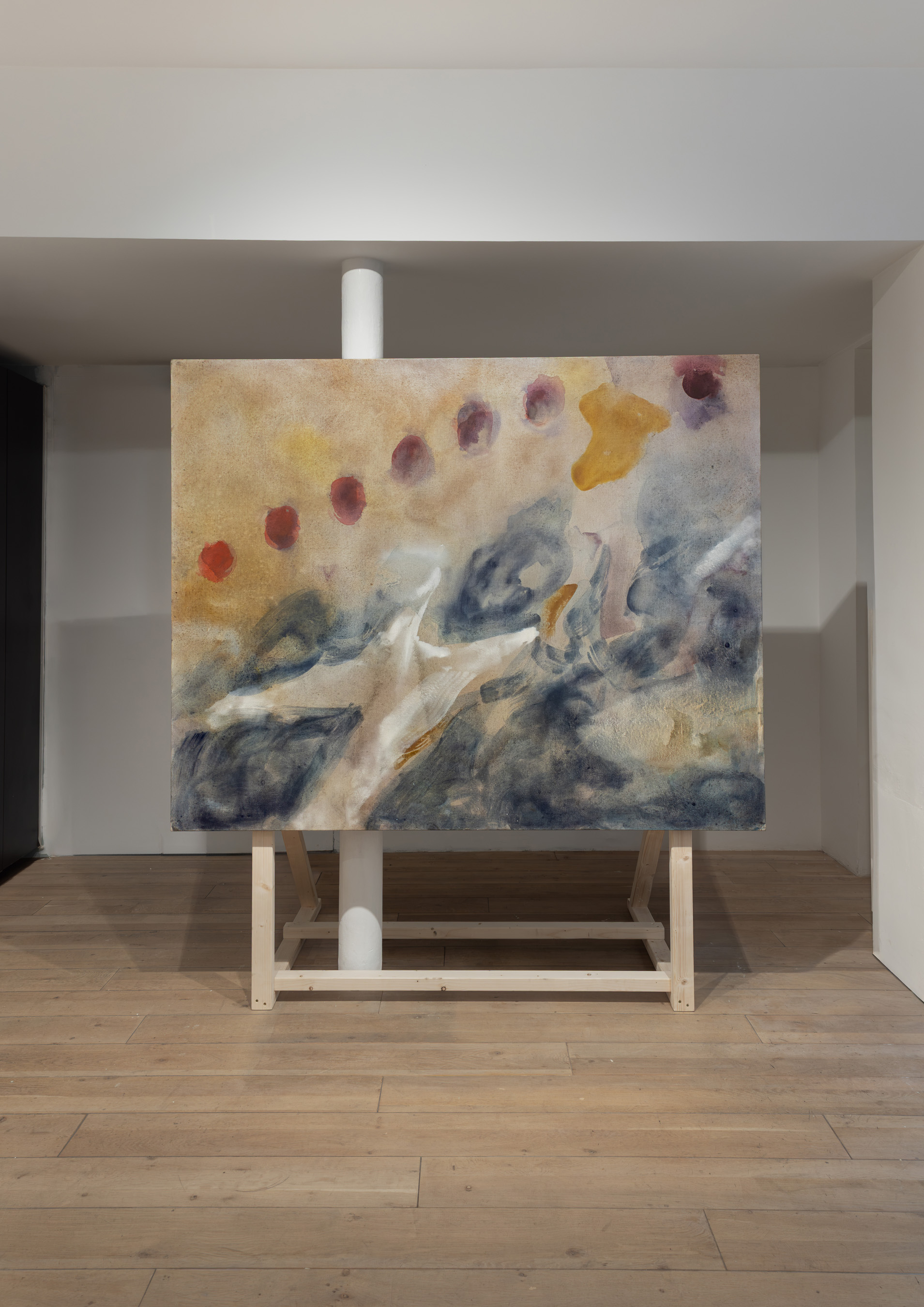
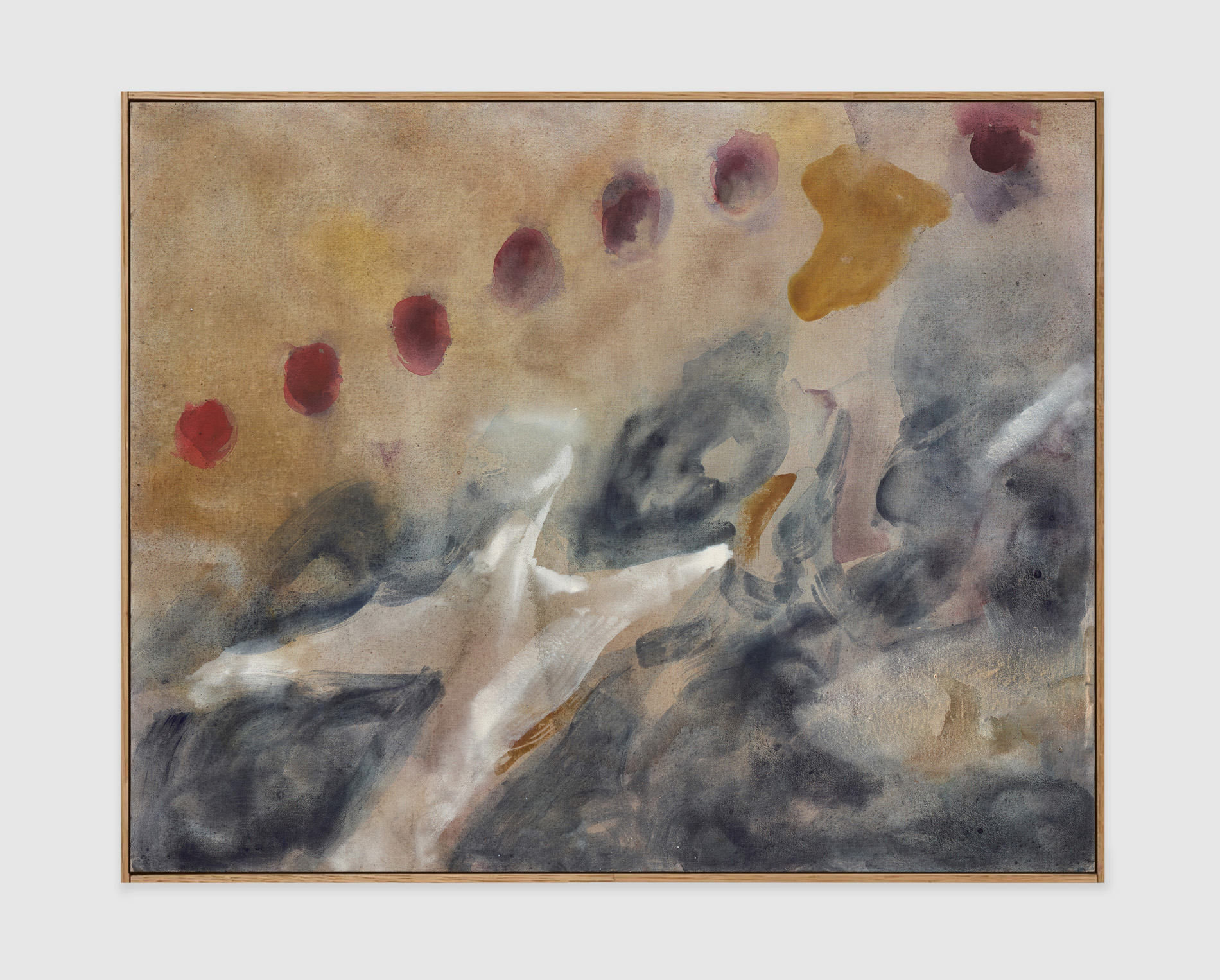
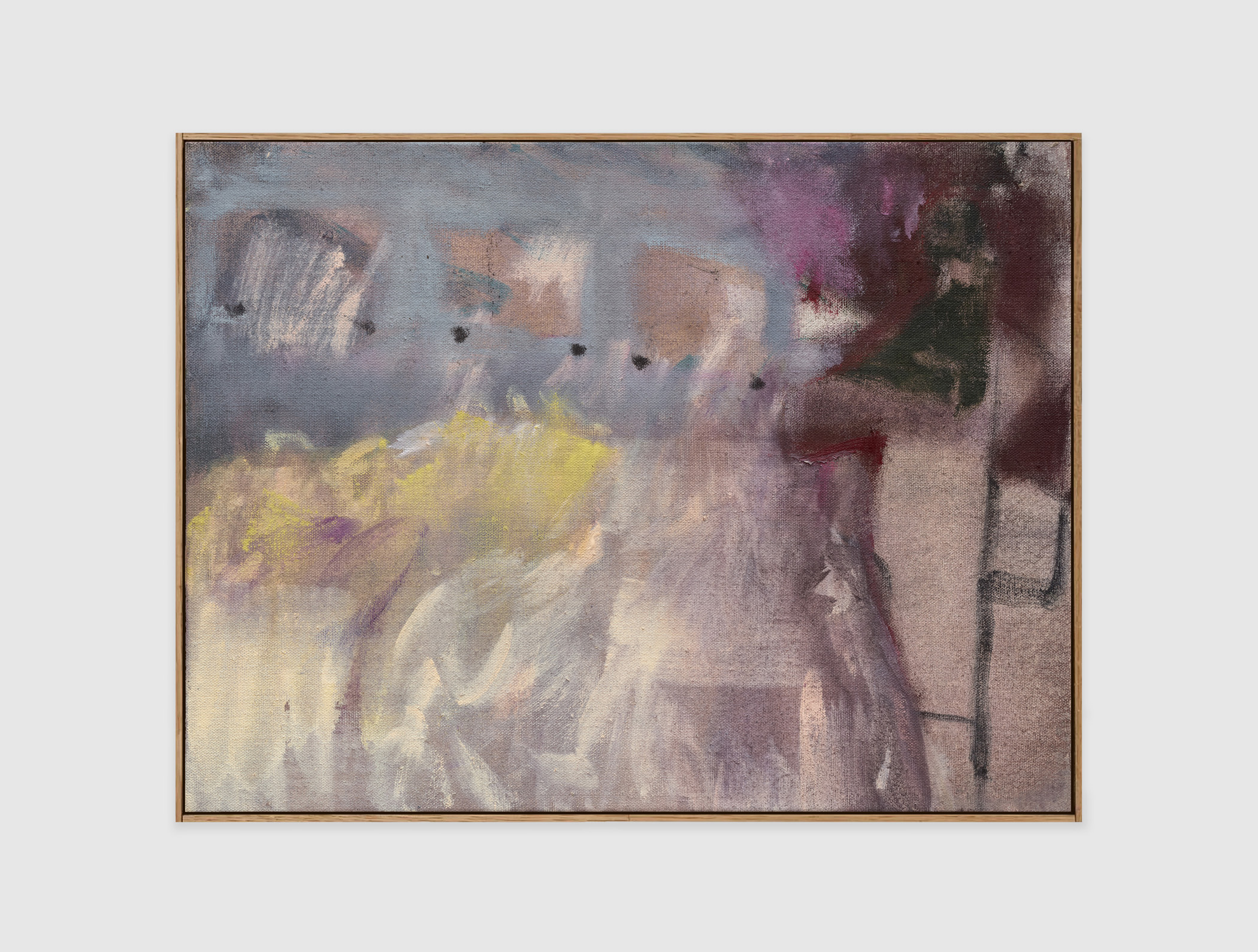
Tara Downs is pleased to present Thankful for the Rain, a new body of work by British painter Nick Jensen, opening in Paris this October. Jensen’s paintings emerge from the marshlands and post- industrial waterways of North London. Each canvas begins as a watercolor study, a habit formed in his early years as a skateboarder, sketching landscapes en plein air between sessions. The paintings are worked up in distemper, prepared from natural earth pigments suspended in an animal-glue binder diluted with water, a medium itself constructed from landscape and long associated with theatrical scenery and devotional painting. Chalky and absorbent, it imparts broad chromatic fields while sustaining a mode of painting rooted in fixed architectural sites and iconographic continuities, from theatrical backdrops sponged down and repainted between productions to the a secco passages of early fresco, the domestic interiors Vuillard rendered in “peinture à la colle,” and Walter Sickert’s smoky theater boxes. Materially fluid yet historically anchored, the medium contrasts with succeeding touches of oil that amplify a figure, ground a gesture, or concentrate a flare of color, the paintings proceeding through a kind of scenic accretion and withholding.
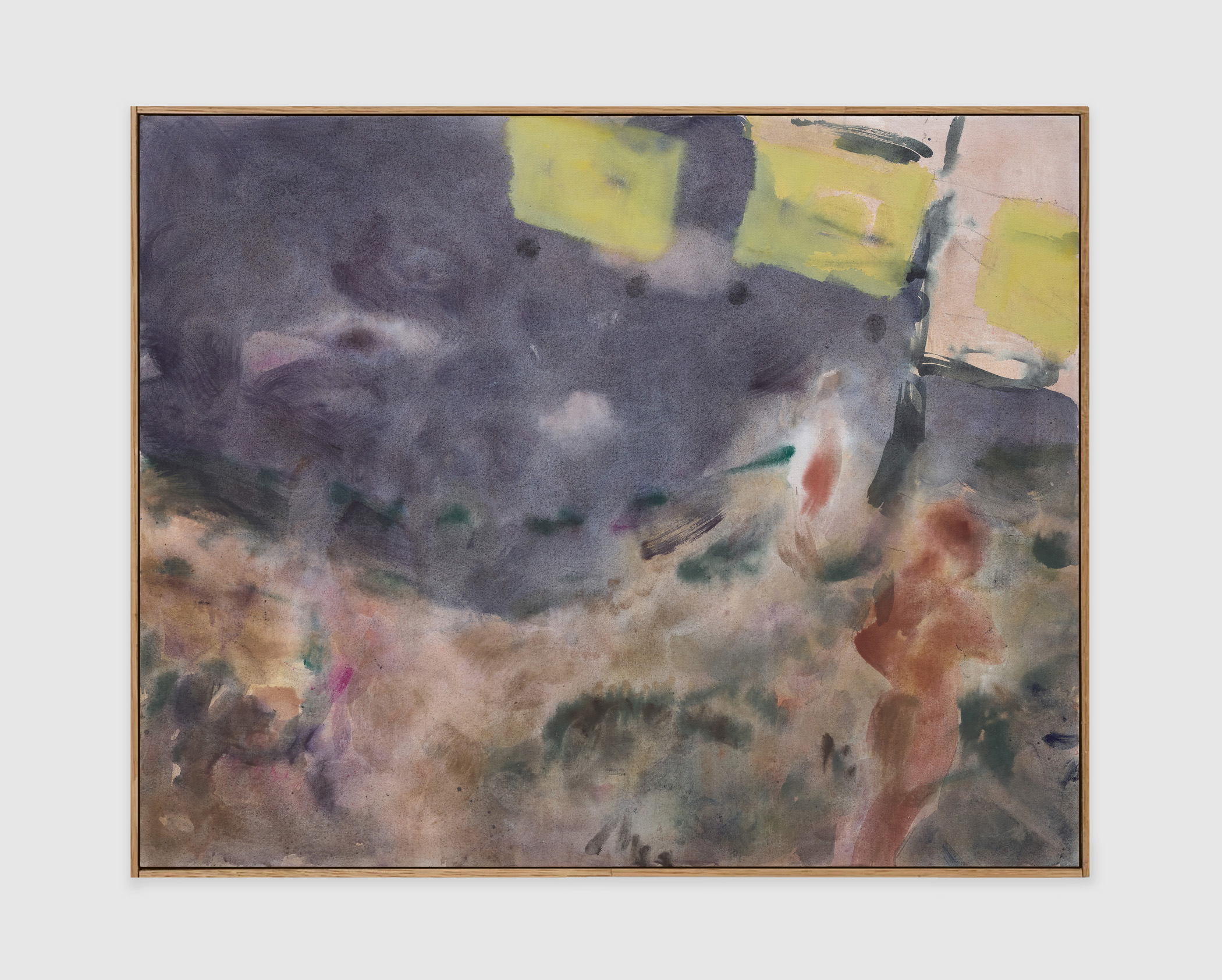
Working in a medium historically tied to impermanence, Jensen draws his subjects from the immediate topography of his life in North London. The paintings grow from observations of Hackney Marshes, the floodplain bordering his studio, where rail lines and the city’s industrial fringes continually interleave with the pastoral. The trains running along its edge recur throughout the exhibition: in Trains on the Marshland II and the paired Trains and Games paintings, carriage windows pass as blocks of light along the upper edge while small groups gather in the scrub below. Built up in successive layers of distemper and oil, each canvas revisits a single scene repeatedly, much as the mind returns to a dream in the effort to reconstruct it; forms surface from abstraction and slip back into haze, suspending the image at the threshold where feeling arrives before language. Jensen’s work extends the tradition of English weather painting into a reserved, perceptually unstable register, holding to atmosphere, latency, and the entanglement of personal and art historical memory.
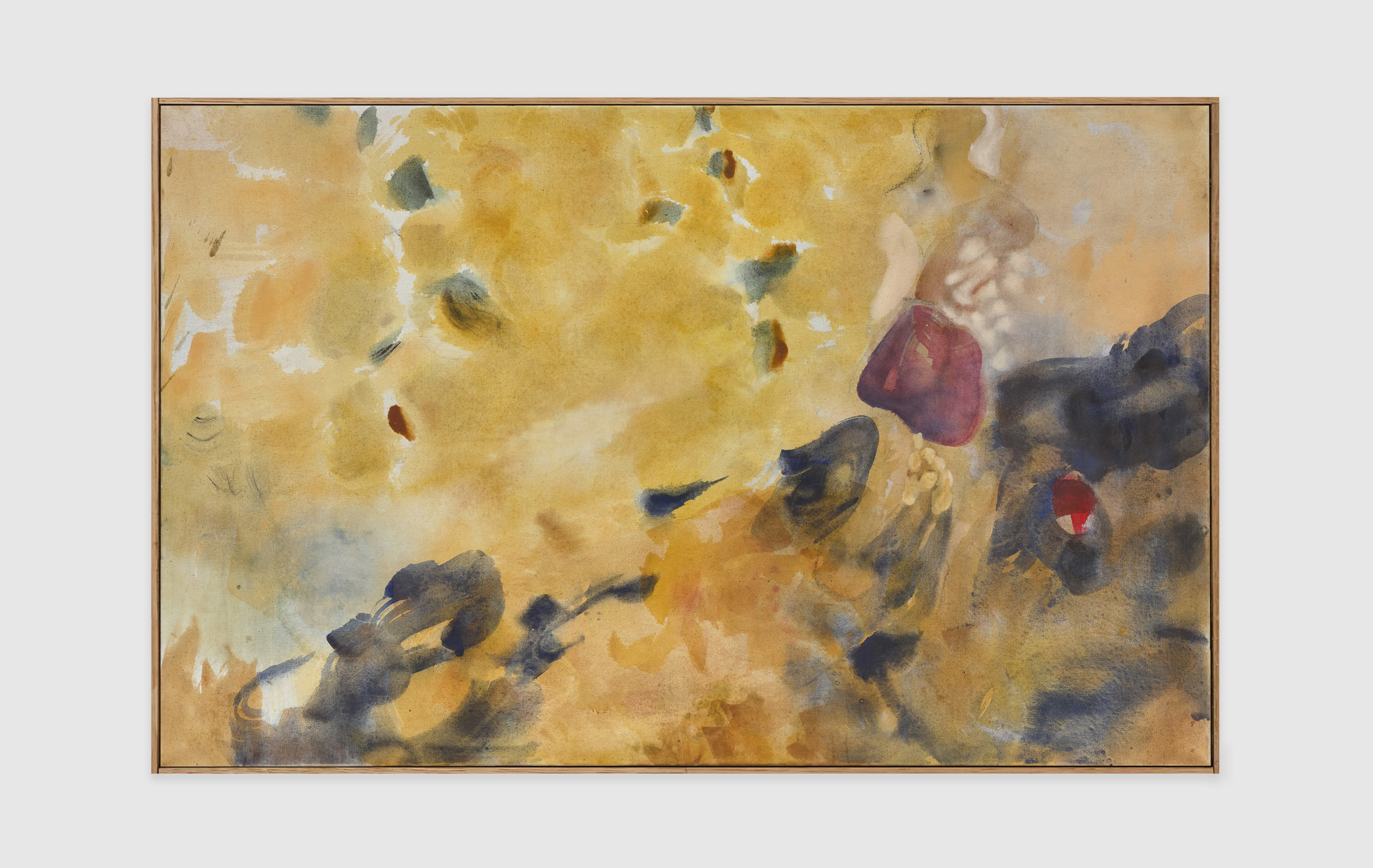
Figures move through these landscapes absorbed in play, ciphers of liberated time. Other works turn to the banks of the River Lea and vespertine streetscapes, carrying traces of the marshes toward near- abstraction; in Star on Lea (Twilight), a chain of red orbs arcs over an ochre dusk. Merging the eidetic uncanny of Peter Doig with a line of aqueous painting running from Tiepolo to Pat Steir, Jensen’s mark- making is highly variegated, his palette more restrained: mushroom greys, siennas, and muted flesh tones suspended beneath a distinctly English mist, lit by a flickering, lantern-lit pall recalling the northern spill of London’s sodium glow.
The resulting images hold something of the cinematic: moments caught just before or after the main action, in the manner of Degas’ dancers adjusting a strap offstage. His subjects appear turned away from the viewer, intent on the marsh’s small particulars, a device running from devotional fresco through Friedrich to Hammershøi. His handling recalls the hushed intimacy of Bonnard, while his strata of pigment and pattern share something with Per Kirkeby’s dialogue between structure and formlessness. The compositions unfold laterally, near-hieroglyphic in their procession across the picture plane, an ordering with precedent in Etruscan tomb painting and the Parthenon frieze, though Jensen’s version is more likely a family hurrying home ahead of the rain. Made with water, from a floodplain, under London skies, these paintings know exactly whom to thank.